Game Film Notes
Players & Families - Saturday, August 15, 2026
Renegades families,
Game 1 is in the books, and we've been back through the film!
We'll be doing this throughout the season—not to pick apart every play, but to help the boys see the game a little differently each time they take the field.
There was plenty to celebrate Saturday, and plenty we can build on.
STAYING IN THE PLAY
Real-Game Example
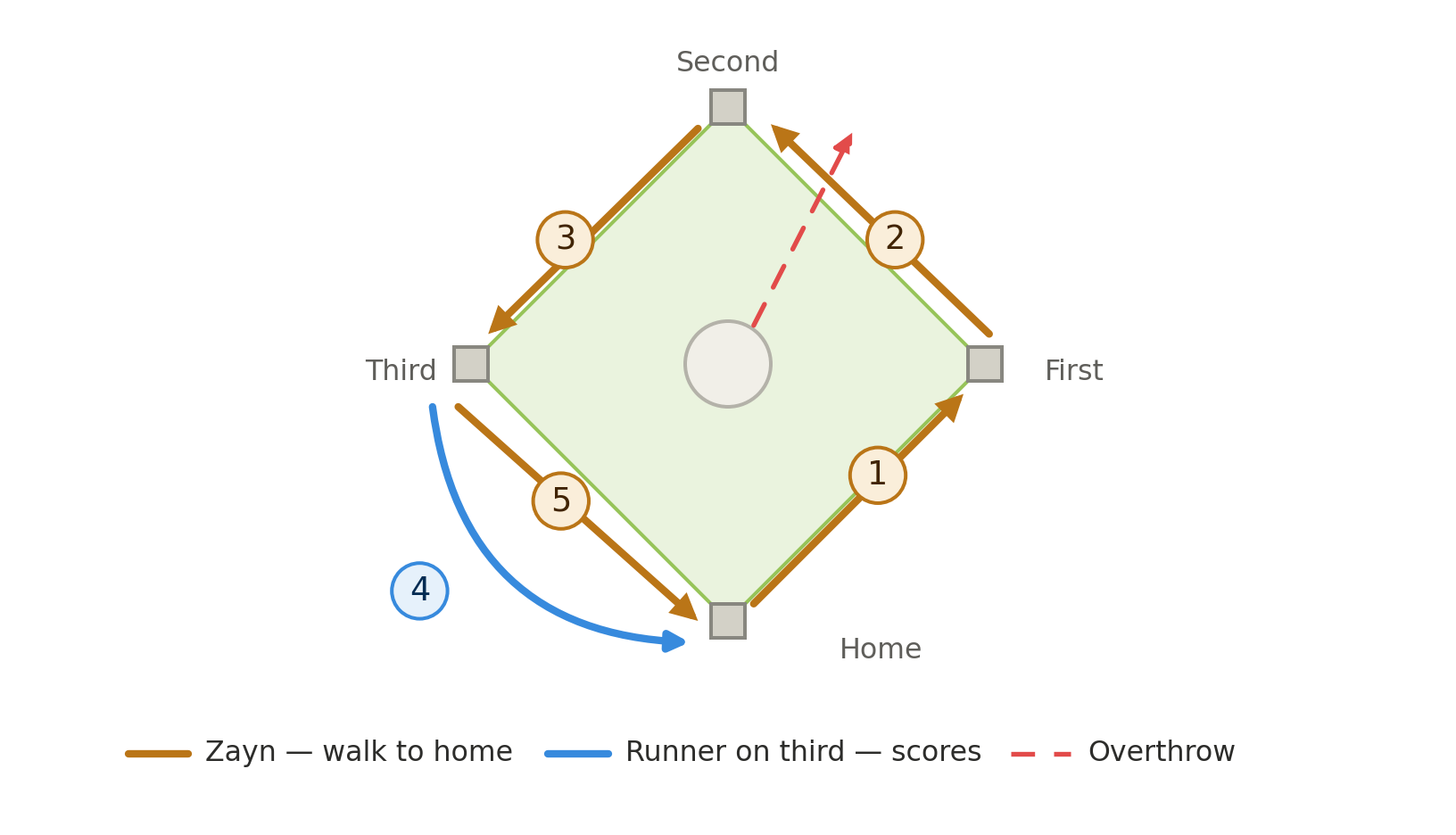
One of our favorite moments came after Zayn drew a walk.
The defense relaxed, but Zayn stayed alert. With good communication from our base coaches, he kept moving as opportunities opened up. Finley was already on third, which gave the defense even more to manage, and what started as a walk became a great example of heads-up baserunning.
When the ball is live, stay in the play.
Offensively, that means being ready when the defense gives us an opportunity.
Defensively, it means staying aware of the runners, controlling the baseball, and staying engaged until the play settles.
SEEING MORE OF THE FIELD
One of the biggest things we're developing right now is helping the boys see more than just the baseball.
Where are the runners?
Who's closest to scoring?
Do we have a play?
Is another throw worth the risk?
Those decisions happen fast, and experience is how players learn to make them.
For now, we're working on a simple idea:
Make the play when it's there. When it isn't, control the baseball and reset.
Every game gives the boys another opportunity to recognize the difference.
Our Approach Right Now
We're building defensive decision-making alongside throwing accuracy, field awareness, and confidence.
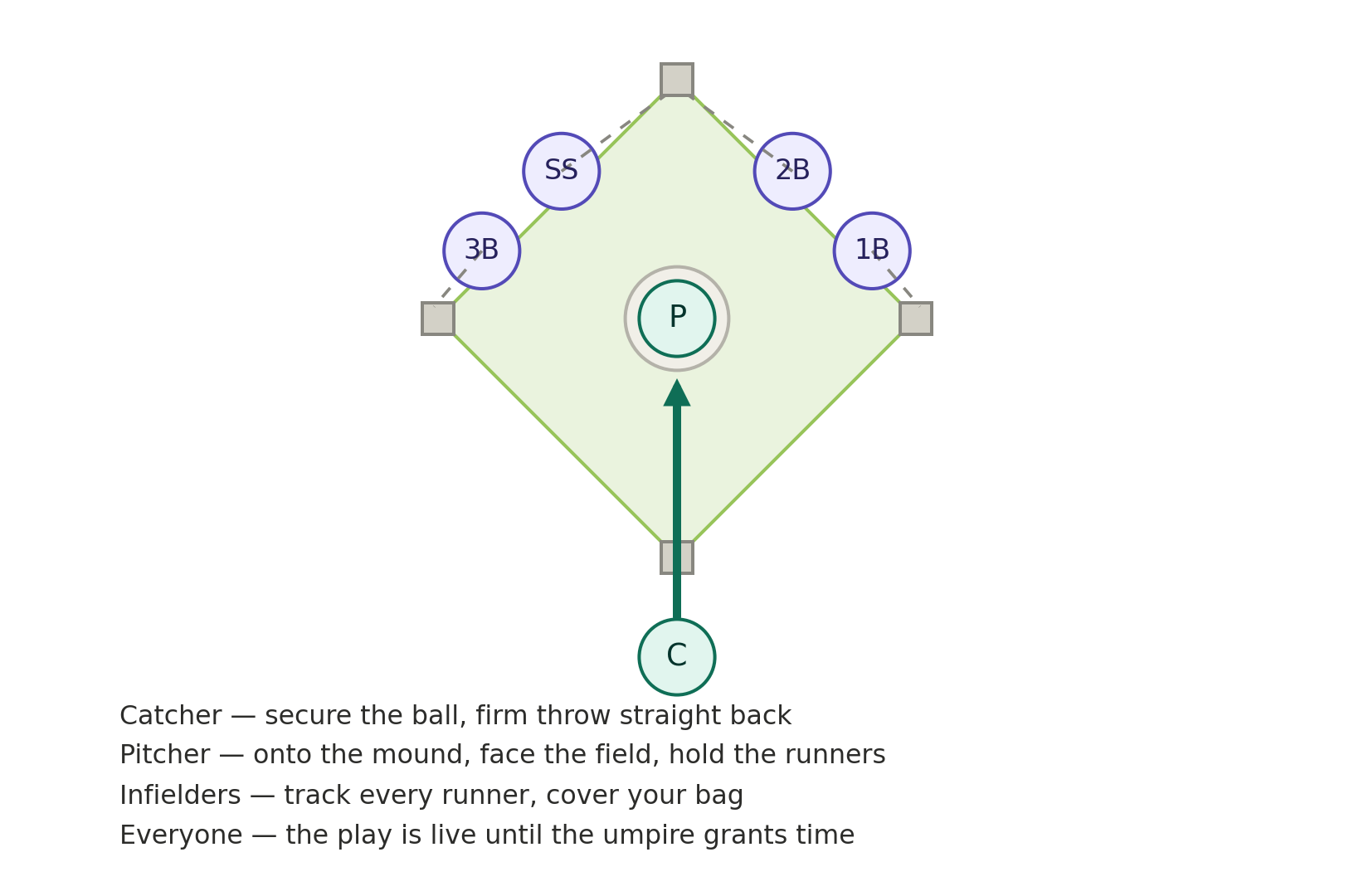
Right now, we're emphasizing smart, controlled baseball. When there's a clear play to make, we want the boys ready to make it. When there isn't, we want them to control the baseball, protect against advancing runners, and reset for the next pitch.
As their skills and Baseball IQ grow, we'll keep adding more opportunities to make aggressive defensive plays.
The goal isn't to make fewer plays. It's to help the boys learn which play is there.
Then go directly into Positional Responsibilities.
Catchers
After every pitch, secure the ball and know where the runners are before deciding what to do with it.
Our first priority while the ball is live is the lead runner.
With a runner on third, the catcher and pitcher are working together to protect home plate. That usually means keeping the ball controlled between them rather than making a low-percentage throw to third.
At this level, an unnecessary throw to third can quickly give the lead runner an opportunity to score.
That doesn't mean we can't look a runner back, fake a throw, or make him think about us. We just don't want to create unnecessary risk trying to pick him off.
Pitchers
Be ready to receive the ball and know where the lead runner is.
With a runner on third, get into position where you and the catcher can work together to protect home plate and keep that runner from taking an easy opportunity.
Once the runners are controlled, secure the ball, get set, and reset the field for the next pitch.
Infielders (1B, 2B, SS, 3B)
Stay locked in and track every baserunner throughout the entire sequence.
Always be ready to cover your bag and receive a quick pickoff throw. If the pitcher spots a runner straying too far and makes a move, the covering fielder should already be anticipating the ball.
All Fielders
A play doesn't end simply because the pitch reached the catcher.
Stay alert and active until the ball is securely back with the pitcher and the action has settled.
Baserunners at Home Plate
There's a lot for a baserunner to process as he approaches home. Is there a play developing at the plate? Does he need to slide? Is another runner coming behind him?
We're helping the boys learn to read those situations rather than automatically sliding every time. When multiple runners are coming home, an unnecessary slide can also create congestion for the runner behind.
We're also working on keeping runners moving forward instead of turning to find the baseball. Run hard, listen, and trust the cue from your base coach.
Practice Point
We'll continue building clear, consistent cues from our base coaches so the boys know what they're hearing and can react confidently without having to find the ball themselves.
Turning Game Experience Into Development
Player development is a group effort. We'll keep doing our part on the field and sharing what we're learning along the way so players and families can build on it with us.
We're not looking for perfection. We're looking for engagement, understanding, and growth across the season.
Every game gives the boys more experience to draw from — another chance to see the game, understand it, and recognize a little more the next time.
Play it. See it. Learn from it. Play it again.
That's how Baseball IQ grows.
Read the other half of this week's notes: Game Film Notes — Coaches & Volunteers
We hope these notes are useful to our Renegades players and families. Have a question, thought, or something you noticed? Join us in the comments below.